


Hurricane Preparedness
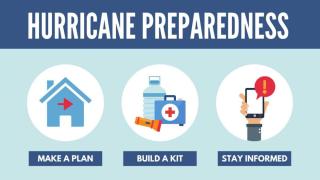
Hurricanes can cause major damage, so it's important to be prepared! The Atlantic Hurricane Season, which East Hartford is in, starts June 1 and goes through November 30 each year. Make sure you take the necessary steps to minimize damage to yourself, your loved ones, and your property!
1. Make an emergency plan: Utilize the CT Ready! Personal Preparedness Guide to make a plan. Physical copies are available for free at the East Hartford Health Department, while supplies last.
2. Pay attention to emergency alerts: Sign up for EH Alert Network for notifications!
A hurricane watch means hurricane conditions (sustained winds of 74 mph or higher) are possible in a stated area. Experts announce hurricane watches 48 hours before they expect tropical-storm-force winds (sustained winds of 39 to 73 mph) to start.
A hurricane warning is more serious. It means hurricane-force winds are expected in a stated area. Experts issue these warnings 36 hours before tropical-storm-force winds are expected in the area to give people enough time to prepare for the storm.
For more information about hurricane watches and warnings, check out the National Weather Service's Hurricane Center.
3. Gather emergency supplies: Remember, hurricanes can cut-off power and water supplies, your car may be damaged, and roads may be closed or flooded. It's important to prepare:
- Emergency food and water supply
- Medicines (prescription and over-the-counter)
- First aid supplies
- Appliance thermometers for your fridge and freezer
- Alternative power sources (i.e. flashlights or head lamps, extra batteries of various sizes, generator with at least 20 feet of extension cord(s) rated for outdoor use and enough fuel to keep it running)
- Important documents (ID, medical documents, passports, wills, and more)
- Cash
- Fire extinguisher
- Pet supplies (including food and water), as applicable
- Warm clothes and sleeping bags
4. Get your home ready
- Clear your yard. Move bikes, lawn furniture, grills, propane tanks, and building material inside or under shelter so nothing will get blown around during the storm and cause damage.
- Cover up windows and doors to protect yourself from pieces of shattered glass. Use storm shutters or nail pieces of plywood to the outside window frames to protect your windows.
- Be ready to turn off your power. If you see flooding, downed power lines, or you have to leave your home, switch your power off.
- Check your carbon monoxide (CO) detector's battery to prevent CO poisoning. Have battery-powered or backup smoke alarms and carbon monoxide (CO) detectors.
- Use surge protector power strip(s)
5. Get your car ready
- Make sure the gas tank is full.
- Move vehicles to your garage or under cover.
- Always have an emergency kit in your car (clothes/blankets, food water, batteries and chargers, flash light, jumper cables, kitty litter or sand for tire traction, etc.).
- If you don't own a car, make plans with friends and family if you need to evacuate.
6. Be ready to evacuate: Always listen to authorities regarding whether you should evacuate or stay at home. Never ignore an order to evacuate. Staying home to protect your property is not worth risking your health and safety. You may hear an order to stay at home. If driving conditions are dangerous, staying at home might be safer than leaving.
If evacuating:
- Grab your emergency supply kit and only take what you really need with you (cell phone, chargers, medicines, identification like a passport or license, and cash).
- Unplug your appliances and turn off the gas, electricity, and water.
- Follow the roads that emergency workers recommend even if there's traffic. Other routes might be blocked or flooded.
- Pay attention to EH Alert or call 2-1-1 for a list of available emergency shelters. If evacuating with a pet, make sure to ask about accommodations that allow for pets.
If staying home:
- Keep your emergency supply kit in a place you can easily access.
- Listen to the radio or TV for updates on the hurricane.
- Stay inside until an official message declaring the hurricane is over is announced. Even if it looks calm, don't go outside. Sometimes, weather gets calm in the middle of a storm but then quickly gets bad again.
- Stay away from windows. Stay in a room with no windows, or go inside a closet.
Be ready to leave. If emergency authorities order you to leave or if your home is damaged, you may need to go to a shelter or a neighbor's house.
For more hurrican safety tips, please visit: Hurricanes | Ready.gov and Preparing for Hurricanes or Other Tropical Storms | Hurricanes | CDC
| Attachment | Size |
|---|---|
 hurricane_readiness_spanish.pdf hurricane_readiness_spanish.pdf | 210.27 KB |
| hurricane_readiness_english.pdf | 333.93 KB |